

Still Finding Korean Food Confusing? Start Here! A First-Timer’s Guide to Eating Out In Korea
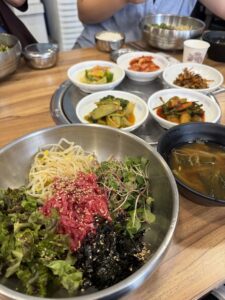
You Found the Food. Now, How Do You Order It?
You have finally found the Korean restaurant you have been searching for. Maybe you have saved it after seeing it recommended online, added it to your travel itinerary, or watched a Korean food video that made you want to try it out yourself.
You walk inside, look at the menu, and suddenly you have a few questions:
Is the menu available in English? Is this dish meant for one person or the table? What are all the small dishes that are already on the table? And most importantly, how do you actually order?
If these questions sound familiar, you are not alone. Ordering food in Korea can feel unfamiliar at first, especially when restaurant customs are different from what you are used to at home.
But understanding a few basic dining customs can make the Korean dining experience much easier—and more meaningful. Korean restaurants are not all the same, so instead of memorizing one set of rules, try to understand the culture behind the meal and learn how to adapt to the restaurant in front of you.
At Korean Gourmet Hunters, we believe experiencing Korean food is about more than simply knowing what to order. It is about understanding the people, traditions, and everyday experiences connected to the food.
And if you want to experience Korean food culture with a more intimate perspective, you can always join Korean Gourmet Hunters on an experience like our Heart Of Seoul Tour.
Before You Order: Understanding Korean Restaurant Culture
There is no single Korean restaurant experience.
During your stay in South Korea, you might find yourself at a small neighborhood restaurant, where the person serving you is the cook and owner all in one. Or you may find yourself at a busy market food stall, where you may have to know exactly what you want and where to sit yourself. Or a large sit-down restaurant, where you are guided through the entire process. Some restaurants use traditional menus and servers, while others may use kiosks, tablets, or other digital ordering systems.
Due to this variety, one of the best things you can do is observe before you order. Look at what other customers are doing. See whether people are ordering at the table, at the kiosks, or paying at a counter. These small observations can tell you a lot about how that particular restaurant operates.
Look at the Whole Menu, Not Just One Dish
Sure, you may have the very dish that you have saved in your camera roll at the top of your head, but another important thing to consider is that restaurants in Korea often have a particular specialty. Some Korean restaurants specialize in one type of food or a small selection of related dishes. Instead of risking the quality of the meal with several unrelated items on the menu, some Korean menus focus on a particular meal or specialty.
It is also important to determine whether a dish is intended for one person or for several people to share. Depending on the restaurant and the dish, portions may be served individually or placed in the center of the table for everyone to enjoy.
Understanding these distinctions can help you order more comfortably—and save you from accidentally ordering far more or far less food than you intended.
So, What Are All Those Little Dishes?
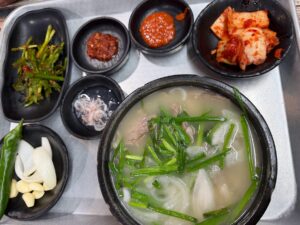
When you sit down at a Korean restaurant and see several small dishes already on the table, you may wonder if you accidentally ordered them.
These side dishes are generally known as banchan (반찬).
At its core, banchan are small side dishes served alongside cooked rice in Korean cuisine, traditionally placed in the center of the table to be shared among diners. Unlike the Western side dishes that accompany a single entree, banchans are integral to the function together with the rice, soup, and the main dish to create balance and variety (Lee, 2026).
A few common types of banchan and their pairings include (Lee, 2025):
1. Kimchi: Fermented Napa cabbage seasoned with gochugaru (red pepper flakes), garlic, ginger, and fish sauce. It is usually served with every Korean meal.
2. Sigeumchi Namul (Seasoned Spinach): Blanched spinach lightly dressed with sesame oil, garlic, soy sauce, and sesame seeds. It is usually served with Korean BBQ or bibimbap.
3. Jangjorim (Soy-Braised Beef): Shredded or sliced beef brisket braised slowly in a dark, savory-sweet soy sauce. It is usually served with rice, where the leftover liquid is often spooned over the rice grains for extra flavor.
Not just the examples we shared, but at the table you’ll sit at too, you’ll see that banchan is not just vegetables as a side dish but can be made in multiple types and portions.
And if you find yourself loving one of the banchan, don’t be afraid to ask whether more is available. Restaurant practices vary, so refills are not something you should assume will work exactly the same way everywhere. When in doubt, you can politely ask the staff:
이 음식 좀 더 주시겠어요? (i eumsig jom deo jusigess-eoyo?)—”Can I have more of this dish, please?”
Ordering at Korean Markets
If your food adventure takes you through a Korean market, be prepared for a different pace.
At a busy market such as Namdaemun Market, you may encounter vendors serving different foods in a fast-moving environment. Especially during busy periods, it may get overwhelming, but its straightforward ordering is something you’ll get used to fast.
Some vendors usually manage their own seating or don’t have any at all. If you see a stall that catches your eye, simply take a seat. If the counter is packed or they don’t offer one, standing near the stall is perfectly acceptable for quick bites like fish cakes on a skewer. It is also the best way to throw away your trash, as it is difficult to find trash cans nearby.
Once you find yourself in the front of the line or are acknowledged by your vendor, do not let the language barrier make you nervous. Most market vendors are incredibly adept at serving international tourists, and the food is almost always displayed right in front of you. To avoid any miscommunication, though, the easiest way to order is by pointing directly at the dish you want. Many, not all, may feature menus with photos, English translations, or plastic food replicas.
While some vendors accept cards, it would be in your best interest to carry South Korean won (symbol: ₩, code: KRW) with you. It would also be best practice to ask the vendor if they accept certain forms of payment before ordering.
Once you order, your food will arrive remarkably fast. Street food is usually kept hot and ready. Depending on what you order, the vendor would ask if you want condiments or none. Some vendors may have you put the condiments you want in a shared space on the counters, where they may hold napkins and cutlery as well.
Still unsure of what to do? Take a moment to observe the people ordering before you and imitate them as best as you can.
KGH Insider Tip:
When you visit a market, do not be afraid to slow down and observe. One of the best ways to become comfortable with Korean food culture is to pay attention to what is happening around you.
During the Heart Of Seoul Tour, Korean Gourmet Hunters tour guides take guests through places such as Namdaemun Market, where food is not simply something to eat—it is part of the everyday environment.
There, you can eat and learn the importance of indispensable Korean ingredients within the Namdaemun market, such as garlic, ginseng, and seaweed. Become immersed with the local community in the Heart of Seoul learning about the stories and hard work of the vendors.
These types of observations can enhance your dining experience at a market like Namdaemun.
Ordering at a Sit-Down Restaurant
Sit-down restaurants can be more structured compared to food stalls in markets, but there is still no single system that every sit-down restaurant follows.
Depending on the restaurant, you may be seated and be given a physical menu by staff, choose your own table, or use a kiosk or table and pay at a counter.
Here’s a general approach you can expect to take:
- 1. Find Your Table.
Some restaurants accept reservations from booking sites like CATCHTABLE, while others operate on a walk-in basis. You may encounter staff at the entrance, or you may need to follow the restaurant’s particular seating system.
- 2. Look Over the Menu
Some restaurants may carry a brief description of the food on the menu, while others may have the price and name of the dish. Do not be afraid to see if you can make modifications or ask questions about the menu to staff nearby.
- 3. Decide What You Are Sharing
Think about how the dishes will work together.
Ask yourself: Is this an individual meal, or is this something everyone at the table is expected to share?
- 4. Place Your Order
Once you have made your decisions, place the order on the kiosk or with the staff.
- 5. Ask for what you need
Need more water? Want to ask about a side dish? Unsure whether something can be refilled?
Depending on the restaurant, you can easily call or politely ask staff to. In some cases, you can even refill the items yourself.
- 6. Pay
Payment procedures vary. Some restaurants may have you pay at a counter before you receive your food, while others may handle payment at your table or through a kiosk.
When you’re unsure, simply observe the restaurant’s system or ask.
A Few Phrases to Know
You do not need to be a fluent speaker in Korean to order here. Though, to make the ordering experience easier, here are a few phrases that you can keep in mind:
- 1. 하나 주세요 (Hana juseyo)—”One, please”—when asking for one of something or to indicate you are dining alone.
- 2. 이거 주세요 (Igeo juseyo)—” This one, “please”—when you are pointing to a menu item or food display. Make sure it is clear what you are pointing at.
- 3. 물 좀 주세요 (Mul jom juseyo)—”Some water, please.” – A simple way to ask for water.
- 4. 저기요 (Jeo gi yo)—”Excuse me”—when you are calling over a waiter in a busy space.
- 5. 반찬 더 주세요 (Banchan deo juseyo)—”More side dishes, “please”—when you would like more of an available banchan.
- 6. 계산할게요 (Gyesanhalgeyo)—”I’d like to pay.” – when you are ready to settle the bill.
If you are unsure about a menu item, translation apps such as Google Translate or Papago can also be useful. However, remember that translations may not always fully capture the context of a dish, so do not hesitate to ask restaurant staff when you need clarification.
Going Beyond the Menu With Korean Gourmet Hunters
Practical, informative guides like this can help first-time travelers understand the basics of ordering out in Korea, but engaging in Korean food culture first hand is a more effective way to order out confidently.
That is where Korean Gourmet Hunters come in.
Engaging in experiences such as the Heart Of Seoul Tour, guests can experience Korean food in places where they are part of everyday life. With the guidance of our local, seasoned team of tour guides, you and your companions can taste and learn in spaces like Namdaemun Market, one of South Korea’s largest traditional markets, or the bustling, trendy streets of Myeongdong.
Visitors like you can encounter delicious foods, ordering styles, and dining experiences right in the heart of Seoul in one of our tours.
Because ordering like a local isn’t about knowing every Korean word or memorizing every restaurant rule.
It’s about being curious enough to understand the culture behind the food.
Ready to Explore Korean Food Culture With Us?
Save and share this guide with your travel companions to prepare for your next Korean food adventure. Or better yet, book a tour with Korean Gourmet Hunters when you’re ready to chase Korea’s authentic flavors.
Sources
Lee, S. W. (2025, December 1). Banchan for Korean BBQ: The Essential Guide. Taste Korean Food. https://www.tastekoreanfood.com/ktrend/banchan-for-korean-bbq
Lee, S. W. (2026, July 31). The ultimate guide to Banchan: More than just Korean side dishes. Taste Korean Food. https://www.tastekoreanfood.com/ktrend/guide-to-banchan-korean-side-dishes
Naver Papago. (n.d.). Naver Papago. https://papago.naver.com/