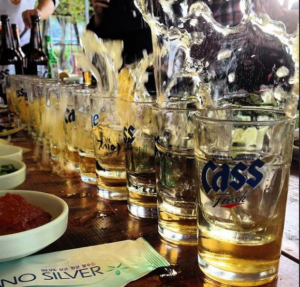

Cheongnyang-ri Market, a living neighborhood market of Seoul
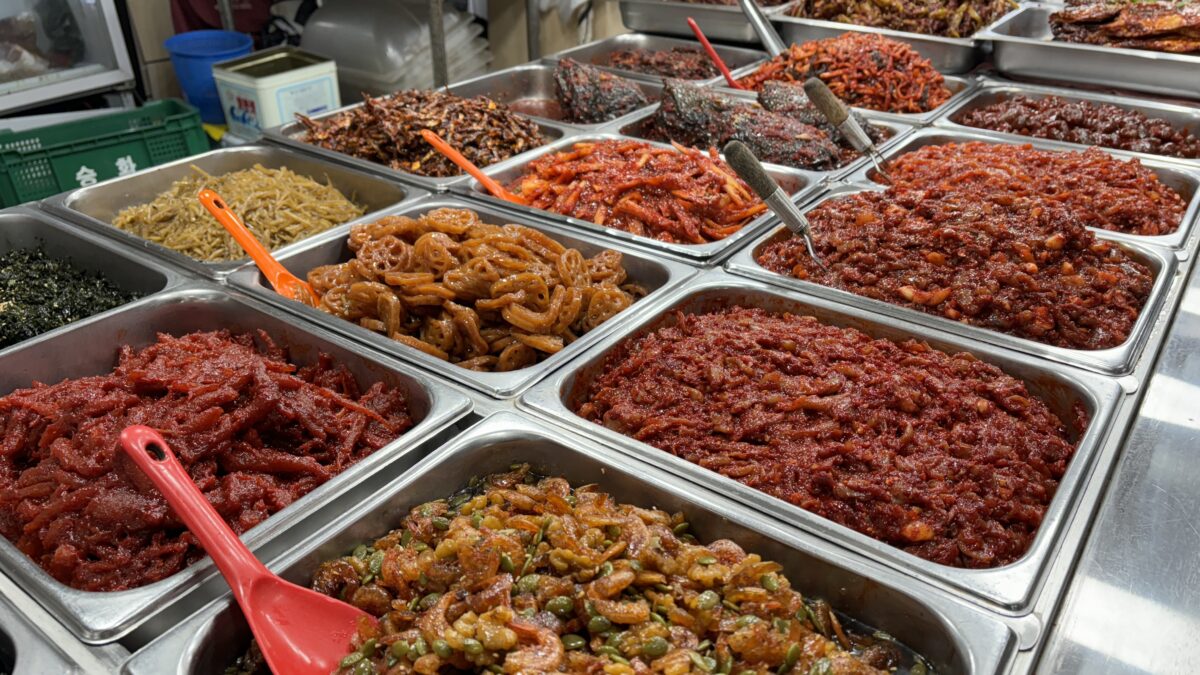
Cheongnyang-ri Market is not a single, clearly defined space. It is a dense, organic market area that grew alongside Cheongnyangni Station, shaped by movement, daily life, and the needs of local residents. Long before the neighborhood became associated with redevelopment and high-rise buildings, Cheongnyang-ri was first and foremost a place to eat, trade, and pass through.
Located in Dongdaemun-gu, between Cheongnyangni Station and nearby residential neighborhoods, the market remains deeply rooted in everyday life rather than tourism.
A market born from the station
The formation of Cheongnyang-ri Market dates back to the 1960s, when Cheongnyangni Station functioned as one of Korea’s most important transportation hubs. Before the era of high-speed rail, travelers moving between major regions—such as Gangwon-do, Gyeongsang-do, and Jeolla-do—passed through this station daily.
Where people gathered, vendors followed.
Small-scale sellers began setting up stalls to serve commuters, travelers, and local workers. Over time, these informal exchanges developed into a permanent market structure, closely tied to the rhythms of the station and its surroundings.
From working-class market to modern infrastructure
In its early days, Cheongnyang-ri was a working-class daily market. Archival photographs show dirt roads, makeshift stalls, and produce laid directly on the ground. The market was functional, practical, and focused on essentials.
As Korea’s economy developed, the market gradually modernized. Improvements in transportation, refrigeration, hygiene, and safety standards transformed the environment. Canopies were installed, lighting added, shelves replaced ground displays, and cold storage became common. These changes allowed the market to maintain its role while adapting to new standards of urban life.
Facing supermarkets without disappearing
In the early 2000s, the rise of large Western-style supermarkets caused many traditional markets across Korea to lose customers. Cheongnyang-ri was no exception.
Rather than fading away, the market adjusted. National and local revitalization programs helped improve facilities while preserving small vendor businesses. One important initiative was the introduction of Onnuri Gift Certificates (온누리상품권), which offer purchasing incentives and encourage consumers to shop in traditional markets.
This balance—modern systems without erasing local character—allowed Cheongnyang-ri to remain economically active and socially relevant.
A market shaped by its community
Today, Cheongnyang-ri Market continues to serve a largely local clientele, including many senior citizens who rely on the market for affordable food and social interaction. The presence of senior-oriented spaces, such as collatech dance halls, reflects how the market evolves alongside its community rather than replacing it.
Food here is practical, generous, and rooted in habit: street snacks, simple meals, butcher shops, produce stalls, and long-standing eateries that prioritize value over presentation.
Tradition beneath redevelopment
One of Cheongnyang-ri’s most striking features today is its visual contrast. Surrounding the market area, large redevelopment projects and high-rise residential towers have reshaped the skyline. Glass-and-steel buildings rise directly above narrow alleys filled with vendors, delivery carts, and food stalls.
This coexistence creates a uniquely Seoul-like tension: rapid urban development layered over a market that continues to function much as it always has. Busy, noisy, crowded—Cheongnyang-ri remains firmly anchored in real life.
Why Cheongnyang-ri matters
Cheongnyang-ri Market is not curated, polished, or designed for visitors. It exists because people still need it.
Compared to Seoul’s rising living costs, it remains a place where eating well can still be affordable, and where human interaction—between vendor and customer, neighbor and neighbor—remains central.
For us, Cheongnyang-ri represents the everyday side of Korean food culture: informal, resilient, and deeply connected to place. It is not about spectacle, but about continuity—how food, movement, and community intersect in the life of a city.
Walking through Cheongnyang-ri is not about discovering something hidden. It is about witnessing how Seoul truly works, one market street at a time