
Kimjang : l’art de faire le Kimchi
If asked to name the first Korean food that comes to mind, many people would answer “kimchi”—and for good reason. Kimchi is served as a side dish at nearly every Korean meal, and together with rice and soup, it often forms a quick, balanced, and healthy meal. But how is this famous fermented cabbage actually made? What does the process involve?
Kimjang
The preparation of cabbages for fermentation into kimchi—known as kimjang—traditionally takes place over several days, beginning sometime in November. Family members often gather from near and far to prepare hundreds of cabbages, enough to last throughout the long winter months. Although kimjang as a large-scale community practice has declined in recent years, it continues to hold deep cultural and familial significance. In recognition of its importance, kimjang was inscribed on UNESCO’s Intangible Cultural Heritage list in 2013.
What Is the Kimjang Process?
First, napa cabbages are cut into halves or quarters and thoroughly salted using coarse sea salt and brine. They are then left to rest for about 30 minutes before being rinsed. In some cases, the cabbages are left overnight in salt brine to further soften and season them.
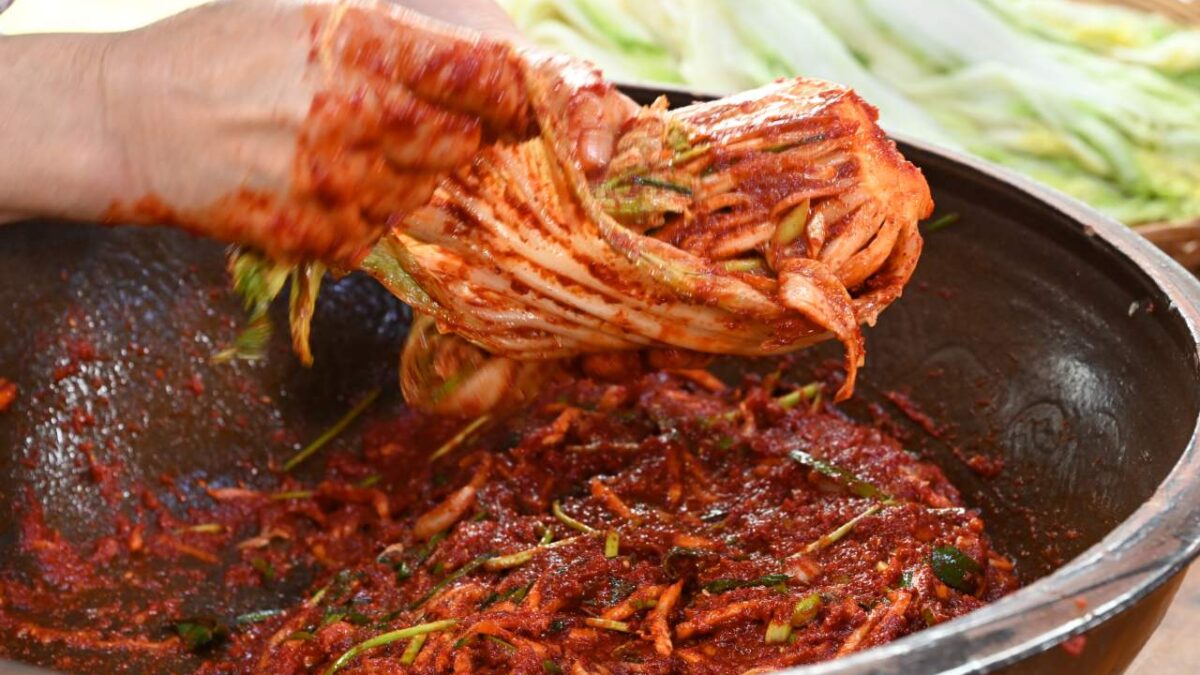
Next, the seasoning paste—known as yangnyeom—is prepared. This mixture typically includes Korean red pepper powder (gochugaru), radish, green onions, mustard powder, ginger, garlic, anchovy fish sauce, and small shrimp, either fermented or fresh. Depending on family tradition and taste preferences, sweet fruits such as pears or persimmons may also be added.
Once the seasoning is ready, the cabbages are carefully stuffed with the paste, starting from the outer leaves and working inward toward the core. Traditionally, the prepared cabbages were stored throughout the winter in large earthenware pots called onggi. Today, most households use plastic containers or glass jars, storing their kimchi either at room temperature or in specially designed kimchi refrigerators.
After the Kimjang
The kimchi is then left to ferment for anywhere from a few days to as long as two months. Fresh, young kimchi has a light, crisp flavor and can taste relatively mild, while well-aged kimchi develops a deeper, sharper, and more pungent profile. Kimchi stored in the refrigerator ferments more slowly, taking longer to reach its fully mature flavor.
Once ready, kimchi is enjoyed not only as a side dish but also as a key ingredient in countless Korean dishes. It appears in foods such as kimbap, kimchi jjigae (kimchi stew), bokkeumbap (fried rice), and as an accompaniment to samgyeopsal (grilled pork belly), samhap (a combination of fermented skate, pork, and kimchi), tofu dishes, and much more.